
A roach sighting in the kitchen calls for a practical response, especially in apartments, busy restaurants, and older homes where hiding places can be plentiful. The right trap depends on whether you need direct capture, a low-mess deterrent, or a quiet electronic device, as well as where you plan to place it. These eight options cover roaches, other crawling insects, and larger rodents across indoor, outdoor, garage, and storage spaces.
The Choices Worth Comparing

Qualirey Jumbo Rat Glue Traps, 16-Pack

tenerolike 36-Pack Peppermint Oil Rodent Repellent Balls

Hoelesky 30-Pack Pre-Baited Insect Glue Traps, Extra Strong Adhesive

Victor M327 Roach Monitor Glue Traps, 150-Pack

Repelifast 10-Pack Ultrasonic Indoor Pest Repellers

Catchmaster Max-Catch Glue Traps, 36-Pack
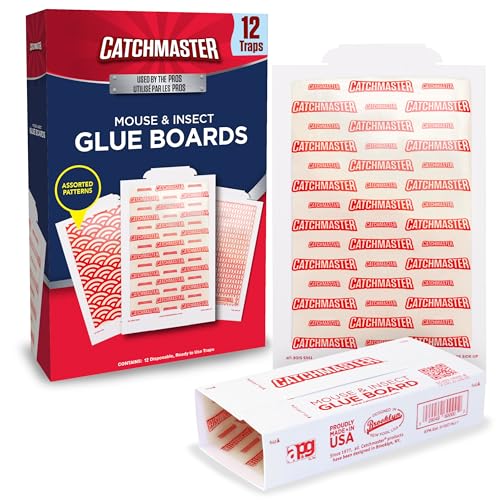
Catchmaster Extra Sticky Mouse and Insect Glue Boards, 5.3 x 8 Inch, 12-Pack

Catchmaster Super Glue Traps, 30-Pack
The Picks, Examined More Closely
Large wall edges, cupboards, and spaces behind substantial appliances give rodents a covered route through a home. These 11.8 by 9.84-inch boards provide a broad adhesive surface, while their heavier plastic trays suit capture areas intended for larger rodents.
Placement matters more than the pack count. Set the boards flush against walls and along routes used by rats, mice, snakes, or other crawling pests. Compared with the smaller Catchmaster boards later in this list, these traps prioritize surface area and sturdiness rather than fitting into tight gaps.
Real Benefits
- Pre-scented boards require no separate bait, simplifying placement along suspected routes.
- The jumbo format gives larger rodents more contact area than compact glue boards.
- Sixteen boards support a spread-out deployment across kitchens, cupboards, garages, or storage rooms.
- The adhesive is described as non-toxic and is intended for use around children and pets.
Things To Consider
- Large boards take up more floor or shelf space than the 5.3 by 8-inch options in this roundup.
- Capture is not immediate, so a trapped rodent may remain attached to the surface for some time.
Quick Facts
Who It Suits Best
You benefit most from this set in a warehouse, garage, basement, or home dealing with rats or other larger rodents.
Look Elsewhere When
Catchmaster Extra Sticky Mouse and Insect Glue Boards fit narrow corners and smaller spaces more easily.
A roach problem does not always require capturing every insect that enters the room. These peppermint-oil repellent balls use scent to discourage mice, rats, roaches, ants, spiders, and other pests from occupying enclosed spaces, making them closer to a deterrent than a traditional glue trap.
Thirty-six units support distribution across a garage, basement, kitchen, storage room, vehicle, or garden shelter. Unlike the Qualirey boards, these balls leave no adhesive surface and do not physically hold pests, which can be useful where sticky residue would be unwelcome.
What Earns Its Place
- Peppermint oil supplies the active scent without requiring bait or a physical trap.
- The moisture-resistant formula suits damp garages, basements, and storage areas.
- Thirty-six balls make it practical to establish several scent points around a property.
Practical Considerations
- Scent-based deterrence is a different approach from direct capture, so results may vary with activity levels.
- Keep the sealed outer bag intact until placement to preserve the stated scent duration.
- The listed 30-to-60-day scent life and 120-square-foot coverage depend on normal placement conditions.
The Right Fit
You gain a practical fit when you want roach deterrence around enclosed areas without placing adhesive boards throughout the space.
Consider Something Else When
Hoelesky 30-Pack Pre-Baited Insect Glue Traps suit homes where physical capture of roaming insects matters more than scent deterrence.
Pre-baited means the board already carries an attractant, so you can position it without preparing separate bait. These flexible boards target ants, roaches, spiders, crickets, scorpions, centipedes, and other crawling insects in rooms ranging from kitchens and bathrooms to balconies and courtyards.
Peel back the protective paper and lay the board in a narrow gap, behind furniture, or near visible activity. Compared with the peppermint balls from tenerolike, this option directly holds insects on a sticky surface, which makes it more useful for confirming where pests are moving.
Everyday Wins
- The built-in attractant removes a baiting step.
- Flexible boards fit narrow gaps behind appliances and furniture.
- Thirty traps allow monitoring across several rooms or activity zones.
- Physical adhesive capture contains insects without chemical bait.
- Each board can be folded and discarded after use.
Small Caveats
- The broad adhesive surface may be less convenient in very confined cabinet spaces than a narrow monitor.
- Outdoor placement exposes the board to weather, so indoor corners remain the more predictable setting.
Feature Snapshot
Made For
This set suits homes dealing with several types of crawling insects across kitchens, bathrooms, patios, or garages.
Another Choice May Suit
Victor M327 Roach Monitor Glue Traps offer a more structured monitoring option when roaches are your primary concern.
Monitoring means placing traps where you can see which areas collect activity, rather than treating one visible roach as the entire problem. The Victor M327 uses a food-based adhesive attractant and multiple access points, giving it a more deliberate monitoring format than a single small glue board.
With 150 traps included, kitchens, dining rooms, stockrooms, and other connected spaces can be checked systematically. Compared with the 30-board Hoelesky set, the greater quantity makes this model a more logical choice for commercial kitchens or other locations where coverage takes priority over compact storage.
Practical Pluses
- Food-based glue attracts crawling insects without requiring separate bait.
- Multiple access points and two catch areas support broader monitoring coverage.
Worth Noting
- One hundred fifty traps require storage, labeling, and a clear placement plan before deployment.
Best Suited To
Restaurants, warehouses, and shared buildings benefit most from the large number of individual monitoring stations.
Skip It When
Catchmaster Extra Sticky Mouse and Insect Glue Boards offer a simpler fit for a single basement, attic, or garage.
Some shared spaces make exposed glue boards inconvenient, particularly near children, pets, or busy walkways. These plug-in electronic repellers use ultrasonic waves, meaning high-frequency sound outside the range of most human hearing, to create an additional deterrent for roaches, mice, spiders, ants, mosquitoes, and other indoor pests.
Ten units allow you to cover several rooms, but each device needs a suitable outlet and open space around it. Unlike the Qualirey boards, nothing is physically trapped, so the Repelifast fits a supplementary role rather than a capture-and-check routine.
Notable Upsides
- Plug-in installation requires no bait, glue board, or trapped-pest handling.
- The electronic format leaves floors and counters clear.
- Ten units support distribution through several indoor rooms.
Where It May Fall Short
- Outlet availability and room layout determine how evenly the devices can be distributed.
- The product does not capture roaches, so it cannot show exactly which room contains the heaviest activity.
Core Details
Built With In Mind
You get a practical fit in apartments, offices, and other indoor spaces where exposed traps would disrupt daily use.
Reach For A Different Pick When
Victor M327 Roach Monitor Glue Traps suit you better when capturing and locating roaming roaches is the priority.
The Max-Catch boards offer a straightforward way to cover several types of crawling pests without preparing bait. Their stated coverage includes insects, ants, mice, rats, roaches, spiders, crickets, and other pests, making them a more varied option than a narrowly focused roach monitor.
For placement, leave the paper covering on initially so nearby pests can acclimate to the board, then position it along a suspected route. Compared with the Repelifast devices, these boards provide physical evidence of activity, although you must handle the occupied trap during removal.
Where It Excels
- Thirty-six no-bait boards support a broad home deployment.
- One product covers roaches, rodents, spiders, ants, crickets, and other crawling pests.
Some Limits To Know
- Leaving the paper in place during the acclimation period requires an extra placement step.
- Each board adds adhesive material that needs proper disposal after use.
- The broad coverage does not mean every trap is equally useful in every room, so focused placement remains important.
Essential Details
Who Will Love This
You benefit most from this set when a garage, basement, or mixed-pest home needs several no-bait monitoring boards.
A Better Fit Elsewhere
Hoelesky 30-Pack Pre-Baited Insect Glue Traps suit you better when a ready attractant is more useful than broad no-bait placement.
Five-point-three by eight inches is a manageable size for shelves, garage corners, and other spots where the Qualirey jumbo boards would feel oversized. These boards use an attractant formula and are designed for insects and mice, so they cover more than a roach-only placement.
Leave the paper on during an initial acclimation period, then place the boards along suspected rodent pathways. Compared with the 36-pack Max-Catch set, the smaller count limits wide deployment, but the compact dimensions make it easier to position in several separate rooms.
A Favorable Mix
- The compact shape fits narrow gaps and less conspicuous shelf spaces.
- No separate bait is needed, which keeps setup simple.
- The adhesive is marketed for both insects and small rodents.
- Twelve boards provide a practical starting point for targeted placement.
Possible Compromises
- Twelve boards offer less coverage than the 30-pack and 36-pack Catchmaster alternatives.
- The initial paper-on placement period requires planning around each location.
Perfect Match For
You get a good fit in apartments, basements, attics, and garages where compact boards matter more than maximum quantity.
Where A Sibling Pick Shines
Catchmaster Super Glue Traps provide broader coverage for a home that needs more boards along numerous rodent routes.
The Super Glue boards deliver a useful middle ground between the 12-pack compact set and the 36-board Max-Catch pack. Thirty traps are enough to establish a network of checkpoints around a home while keeping the quantity easier to manage than 150 monitoring stations.
They are intended for insects, ants, mice, rats, roaches, spiders, crickets, and other pests without separate bait. Leave the paper in place during acclimation, then move the boards along known or suspected paths. Compared with the Qualirey jumbo traps, these boards are the more practical choice for a mixed household pest problem rather than larger rodents alone.
What Works In Its Favor
- Thirty boards offer broad placement across a home or outbuilding.
- No baiting is required before placing the traps.
- The product covers both crawling insects and common rodent activity.
Trade-Offs To Consider
- Occupied boards need careful handling and proper disposal.
- Acclimation calls for leaving the paper covering in place initially.
- Outdoor or damp locations may not suit every adhesive board equally well.
Technical Highlights
The Right Fit
You benefit most from this pack in a multi-room home that needs flexible monitoring for both insects and rodents.
Swap It Out When
Qualirey Jumbo Rat Glue Traps suit you better when larger rodents and maximum board surface are the main concerns.
What Matters Before You Set Traps
Start with the pest and location
Roach traps work best where roaches already travel, such as along baseboards, inside cupboards, and behind appliances. A broad adhesive board suits active crawl spaces, while a smaller trap is easier to position in a confined gap. The visible activity pattern is more useful than placing every trap in one central location.
Decide between capture and deterrence
Adhesive traps physically hold pests, which makes the board useful for confirming where activity is concentrated. Repellent balls create a scent-based barrier instead, making them useful where sticky surfaces or captured insects would be inconvenient. An ultrasonic repeller adds another layer but requires an outlet and does not identify active areas.
Check the practical details
Board size affects placement, while pack quantity affects how many rooms you can cover. Pre-baited traps save a preparation step, whereas no-bait models may include an acclimation period involving the paper covering. Outdoor suitability, storage requirements, and access around electrical outlets also deserve a quick check before deployment.
Placement Details That Change the Outcome
Common Shopping Slip Ups
Choosing a trap for its pest list without considering the room can leave you with the wrong board size or no practical place to put it. Avoid buying a large quantity before mapping likely routes, and check whether an electronic model needs an accessible outlet. For repellent balls, keep the outer package sealed until the unit is ready for placement.
What The Higher Tier Buys
Larger quantities support more extensive monitoring, while broader boards offer greater adhesive surface for larger rodents. Pre-baited boards add convenience, and stronger adhesive formulations may be useful for active insect paths. The higher tier earns its place only when your layout requires that added capacity, so a smaller targeted set can be more sensible in a compact home.
Frequently Asked Questions
What type of glue trap works best for roaches?
A small or medium glue board placed along walls, inside cupboards, and behind appliances is practical for roaches. Pre-baited models can simplify setup, while larger boards are more useful when rodents are also present.
Are glue traps safe around children and pets?
Select traps made with non-toxic adhesive and keep them inaccessible to children and pets. Physical adhesive traps avoid toxic bait, but you should still position them where accidental contact is unlikely.
How many roach traps should I place?
The useful number depends on the building size and the number of likely travel routes. Start with several points in each affected area, then inspect them regularly and add coverage where activity is concentrated.
Should glue traps stay in the same position?
Repositioning can help because roaches change their routes as their environment changes. Keep each trap along an edge or travel path, and move it after heavy activity or once a new activity area appears.
Do ultrasonic pest repellers replace glue traps?
An ultrasonic repeller does not capture roaches or show which area has the most activity. It can complement physical traps in shared indoor spaces, but direct capture remains useful for locating and containing roaming insects.
Final Verdict
The most practical trap is the one that matches the pest, fits the location, and gives you a clear way to check results. Compact boards suit narrow living spaces, larger Catchmaster packs cover mixed activity, the Victor set supports broad monitoring, and repellent or ultrasonic options offer a different approach. Measure the space, note the travel routes, and place each option with a purpose.